






Things to do in Marrakesh DEALS
Stepping into Marrakech feels like entering a world where time moves differently, where ancient traditions pulse alongside modern energy in Morocco’s most captivating urban destination. The ochre walls of the Medina rise against impossibly blue skies, while inside this labyrinth, the sensory assault begins immediately : the call to prayer echoing across rooftops, the sizzle of street food carts, the riot of colors spilling from shop fronts packed with handwoven textiles and gleaming copper. This isn’t a destination for the faint of heart. The city demands engagement, challenges comfort zones, and rewards those willing to push past the initial overwhelm with experiences that linger long after departure. From the serene courtyards of traditional riads to the chaos of Jemaa el-Fna Square, from architectural masterpieces adorned with intricate zellige tiles to the snow-capped Atlas Mountains visible on clear days, Marrakech offers complexity that defies simple categorization. Yes, the constant solicitations can exhaust. The heat tests endurance. The maze-like souks confuse even seasoned travelers. Yet beneath these challenges lies a destination of extraordinary cultural richness, culinary excellence, and visual splendor that makes every frustration worthwhile.
Essential travel tips and practical information
Money, currency, and bargaining essentials
Before leaving Marrakech International Airport, exchange currency for Moroccan Dirhams to secure better rates than you’ll find in the city. More importantly, ensure you have coins, which function like gold dust throughout your stay. Change scarcity represents one of Morocco’s most persistent frustrations, with vendors frequently claiming they cannot break larger bills, hoping you’ll surrender the difference rather than wait.
Carrying exact change transforms daily transactions from potential conflicts into smooth exchanges. When exploring the souks, avoid pulling out your entire wallet to pay for a 20-dirham item. If shopkeepers see triple the agreed amount tucked inside, negotiations reopen immediately, regardless of previous agreements. This isn’t necessarily dishonesty but rather standard practice in a culture where bargaining serves as social interaction as much as commercial transaction.
Speaking of negotiations, prepare to pay roughly half the initial asking price in markets. That leather weekender priced at $60 ? Expect to walk away paying $25 if you stand firm. The key lies in confidence and willingness to walk away. Shop owners desperately want sales, and departing customers often trigger sudden price drops. Don’t lowball insultingly, but don’t accept inflated tourist pricing either. Quote your maximum budget, stick to it, and move toward the exit if the seller won’t meet your offer. More often than not, they’ll call you back with acceptance.
This bargaining culture applies exclusively to souks and street markets. Don’t attempt negotiations in established shops, grocery stores, or restaurants where prices remain fixed. Attempting to haggle over your tagine at a sit-down restaurant will generate confusion and mild offense rather than savings.
- Exchange currency immediately upon arrival at the airport
- Request coins and small bills whenever possible
- Keep money in multiple pockets to avoid revealing your total cash
- Always agree on prices before accepting services or items
- Walk away confidently if negotiations stall
Health, safety, and cultural awareness
Never drink tap water in Marrakech. Foreign bodies unaccustomed to the bacteria present in Moroccan water systems risk illness from even minimal exposure. Some travelers use bottled water for everything, including teeth brushing, though this represents the cautious extreme. Bottled water costs approximately 50 cents around the souks, making hydration affordable despite the city’s intense heat.
Morocco functions as a traditional Islamic nation where conservative dress norms prevail outside tourist zones. Demonstrate respect by wearing shirts with sleeves and skirts covering knees, particularly when visiting religious sites. Marrakech represents Morocco’s most progressive city, where women wear varied clothing styles without incident, but modest choices show cultural sensitivity, especially during Ramadan. Don’t purchase an entirely new wardrobe, but do pack t-shirts and long skirts or dresses as staples.
Understanding basic cultural customs prevents inadvertent offense. The left hand carries associations with uncleanliness, so eat, gesture, and exchange money using your right hand exclusively. Friday holds special religious significance, affecting opening hours for shops, attractions, and particularly mosques. Ask permission before photographing local residents, as many believe photography captures pieces of their souls. Some subjects pose willingly, others decline, and some request small payments of around 10 dirhams for the privilege.
Safety concerns in Marrakech mirror those of any major urban destination. Exercise standard precautions, remain aware of surroundings, and avoid isolated areas after dark. Solo female travelers report minimal harassment compared to other destinations, with cat-calling notably absent. That said, walking alone at night requires extra vigilance, particularly in less-trafficked Medina alleyways where lighting diminishes considerably. Traveling with companions increases comfort levels significantly during evening explorations.
- Purchase bottled water consistently throughout your stay
- Pack modest clothing suitable for religious sites
- Practice using your right hand for interactions
- Check Friday closures before planning your itinerary
- Always ask permission before photographing people
Communication and connectivity
English speakers face minimal language barriers in tourist-heavy areas, where merchants, restaurant staff, and hotel employees communicate comfortably in English. Arabic and French dominate outside these zones, reflecting Morocco’s colonial history and linguistic heritage. The country gained independence from France only in 1956, leaving linguistic imprints that persist today throughout education, signage, and daily conversation.
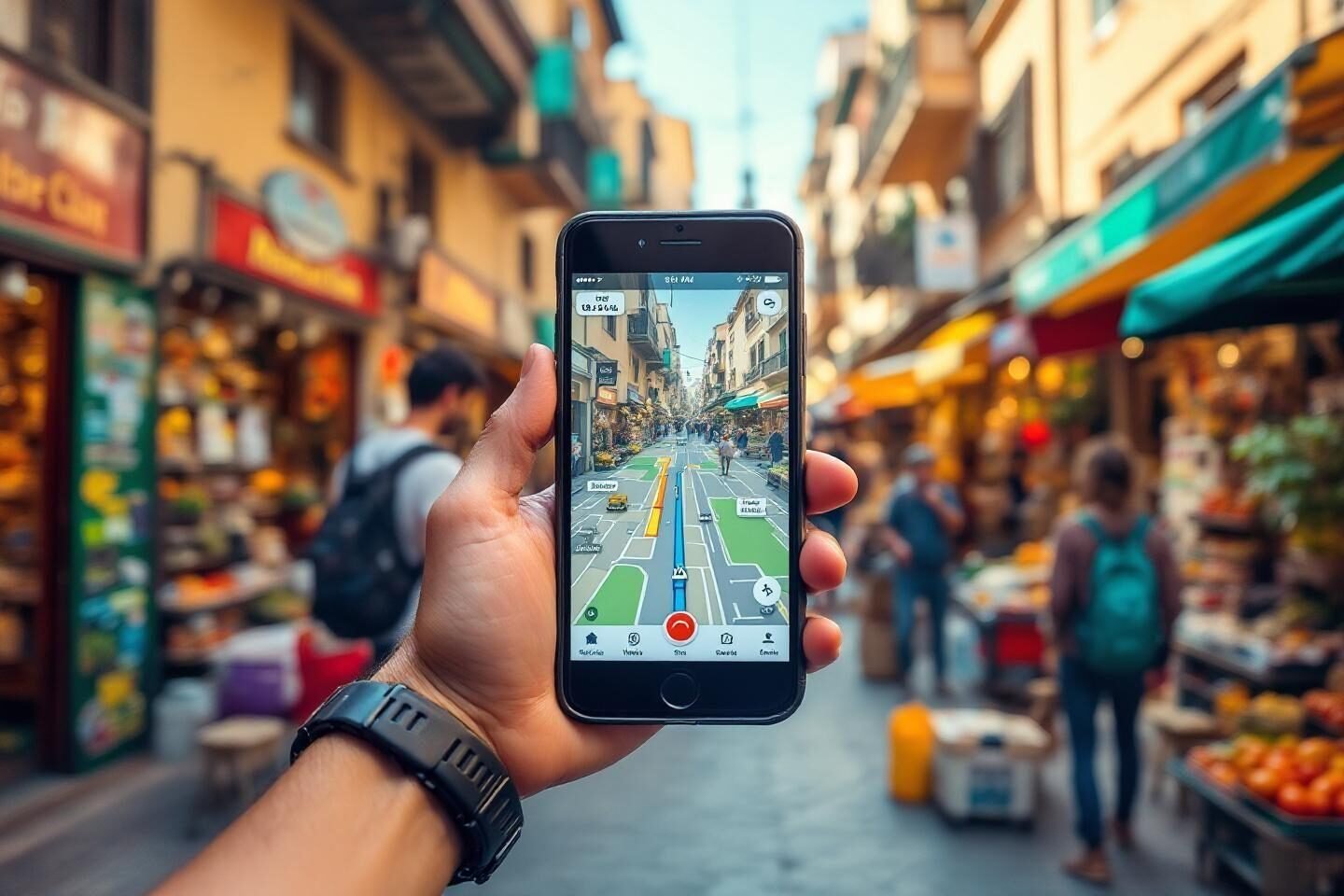
Mobile data proves essential for navigation and communication. Google Maps becomes your constant companion in the Medina’s maze, while messaging apps keep you connected with companions and accommodations. International eSIM solutions offer convenient connectivity, though purchasing local SIM cards provides cheaper data for extended stays. Look for tobacco shops marked with three white circles on blue signs, where Pick Maroc Telecom offers reliable service in distinctive orange packaging. Shop owners typically assist with activation and top-up procedures if you explain your needs.
Where to stay : discovering Marrakech’s magnificent riads
Understanding riads and their unique appeal
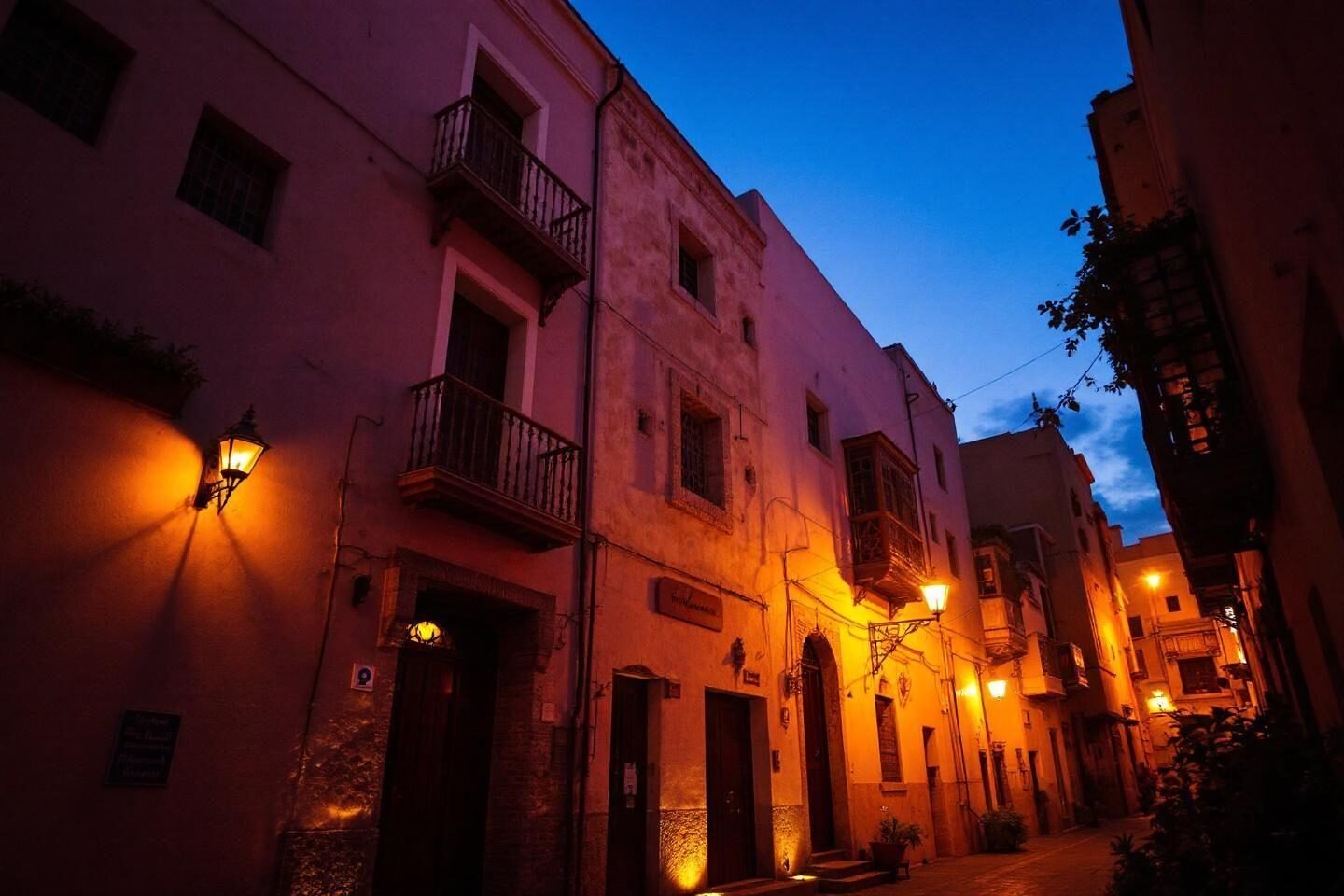
The term “riad” translates to “garden” in Arabic, though these accommodations offer far more than botanical displays. Traditional riads function as small oriental palaces built around beautiful internal patios, showcasing the architectural richness of the Medina through intricate tilework, water fountains, and lush courtyard gardens. Unlike conventional hotels with exterior-facing rooms, riads turn inward, creating peaceful sanctuaries insulated from the surrounding chaos.
Most riads contain fewer than ten rooms, fostering intimate atmospheres where staff remember guest names and preferences. The open-air lobbies blur boundaries between interior and exterior spaces, while delicately placed tiles create visual feasts at every turn. Many feature rooftop terraces where breakfast and dinner service occurs, offering views across the Medina’s rooftops toward the towering Koutoubia Mosque. Some upscale properties incorporate pools and hot tubs into their courtyards, though space constraints limit these amenities to larger establishments.
Staying in a riad provides authentic cultural immersion impossible to replicate in standard hotels. The architecture tells stories of traditional Moroccan life, where families gathered around central courtyards protected from exterior observation. Hand-carved wood details, colorful zellige tiles, and sculpted plaster decorations demonstrate craftsmanship passed through generations. Each riad possesses distinct character, with independently owned properties offering hospitality reflecting individual families rather than corporate protocols.
Riad recommendations across all budgets
Budget-conscious travelers find excellent options starting around £64 per night. Riad Dar Attika delivers solid value with traditional decor and friendly service, while Riad Adika earns particular praise for exceptional hospitality, stunning decoration, and incredible food. Riad Palais Calipau and Riad Mur Akush hover around £85 nightly, offering comfort without luxury price tags. Riad Le J and Riad Bahia Salam provide similar value near £90-94 per night, with Riad Tizwa requiring two-night minimums at approximately £100 total.
- Riad Dar Attika offers traditional architecture starting at £64 nightly
- Riad Adika combines exceptional service with authentic design
- Riad Nesma provides excellent Medina location with rooftop pool
- Bliss Riad features intimate ten-room spaces with amazing staff
Mid-range budgets unlock properties with enhanced amenities and design elements. Riad 72 emphasizes boutique aesthetics, with unique rooms highlighting traditional Moroccan craftsmanship through contemporary lenses. Riad Yasmine creates jewel-box intimacy in the Medina’s heart, while Riad Cologne starts around £100 nightly. The Angsana Heritage Collection properties including their Heritage Suite Rooms begin at £139, offering more space and refined service. Sofitel Marrakech Palais and Tigmiza Boutique Hotel & Spa hover near £267-281, bridging gaps between traditional riads and modern luxury hotels.
Luxury seekers access extraordinary properties starting around £379 for Palais Ronsard Relais & Chateaux, climbing through Selman Marrakech at £529, The Oberoi Marrakech at £883, Four Seasons near £1,162, Mandarin Oriental at £1,424, and Royal Mansour beginning at £1,454 nightly. La Mamounia represents iconic luxury just outside the Medina walls, featuring beautiful gardens, full spa facilities, gorgeous pools, and spacious rooms that justify premium pricing. These properties deliver impeccable service, exceptional dining, and amenities rivaling any global luxury destination.
Location matters significantly when selecting accommodations. Riad Nesma earns recommendations partly for its position on main strips leading toward the central square, with good lighting and easy walkability moments from gates opening to major streets. Properties buried deep within the Medina’s maze offer authentic atmosphere but complicate luggage transport, particularly during arrival and departure when coordinating porter services becomes essential.
Architectural wonders and historic palaces
Bahia Palace and its splendor
Constructed during the 19th century, Bahia Palace stands as testament to the artistry and wealth concentrated in Morocco’s royal circles. The name translates to “brilliance,” appropriately describing interiors adorned with remarkable stuccos, captivating paintings, and intricate tile mosaics that demand extended viewing to appreciate fully. Every surface receives decorative treatment, from floors covered in geometric zellige patterns to ceilings featuring hand-painted wood details that took craftsmen years to complete.
The palace sprawls across multiple courtyards and gardens, each revealing new perspectives on Moroccan architectural excellence. Stained glass windows cast colored light across Italian marble floors in the sprawling central courtyard, where masterful plasterwork frames doorways and windows in lacework stone. These spaces once accommodated Royal Vizier Bou Ahmed, his four wives, and his extensive harem, with different sections designated for various household functions and family members.
Wandering independently provides visual pleasure, but hiring a knowledgeable guide transforms the experience into historical education. Guides explain the significance of different decorative elements, recount stories of palace inhabitants, and provide context about construction techniques that modern craftsmen struggle to replicate. The investment of 100-150 dirhams for private guiding services pays dividends in enhanced appreciation and understanding that independent exploration cannot match.
- Arrive early to avoid peak crowds and harsh midday light
- Consider hiring a guide for historical context
- Allow at least ninety minutes for thorough exploration
- Bring water as limited refreshments exist inside
Madrasa Ben Youssef and religious heritage
This 16th-century Islamic college functioned as North Africa’s largest educational institution for centuries, training generations of scholars in Islamic law, jurisprudence, and Quran interpretation. Built adjacent to Ben Youssef Mosque, the madrasa accommodated hundreds of students in tiny cells surrounding a magnificent central courtyard that demonstrates the priority placed on communal spaces over individual comfort.
The same decorative elements defining other major monuments appear here in concentrated form : intricately hand-carved wood, colorful zellige tiles creating mesmerizing geometric patterns, and detailed sculpted plaster covering nearly every wall surface. Restoration work completed in 2022 returned the building to original glory, revealing colors and details obscured by centuries of wear and inadequate previous repairs.
Visitors navigate through the vestibule into the prayer room, then explore student housing areas where scholars lived during their studies. The tiny cells, barely large enough for sleeping mats and books, contrast dramatically with the soaring decorated spaces designed for learning and worship. This juxtaposition illustrates educational philosophies prioritizing communal knowledge sharing over individual comfort, with students emerging from cramped quarters into inspiring architectural environments designed to elevate thinking and spiritual connection.
Dar El Bacha Palace and other architectural gems
Constructed in 1910, Dar El Bacha Palace gained prominence when Thami El Glaoui became Pasha of Marrakech in 1912, transforming the building into a venue for lavish receptions and banquets attracting international guests. The palace now houses the Confluences Museum, presenting exhibits that showcase Moroccan culture through rotating displays of traditional crafts, historical artifacts, and contemporary art interpretations.
The main courtyard features fragrant orange trees and resident birds whose chirping creates soundscapes reminiscent of historical palace gardens. Unlike more touristed sites, Dar El Bacha maintains relatively calm atmospheres where visitors linger without jostling crowds. The palace also houses Bacha Coffee, potentially the world’s most beautiful coffee house, making combined visits efficient and rewarding.
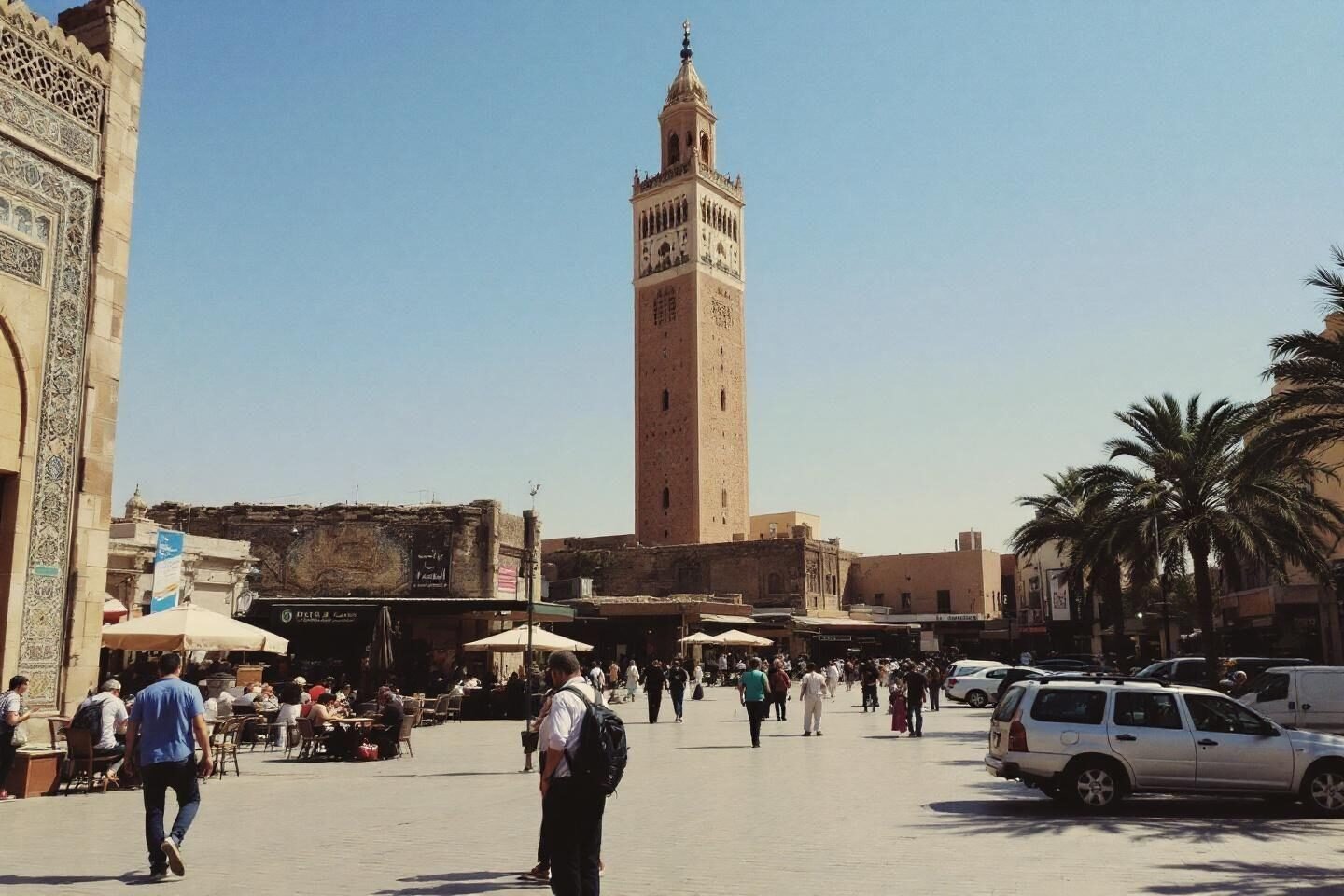
Koutoubia Mosque dominates the Marrakech skyline, its minaret serving as navigation reference throughout the Medina. Non-Muslims cannot enter, but the exterior architecture and surrounding gardens merit appreciation. El Badi Palace presents atmospheric ruins of what was once Morocco’s grandest palace, now reduced to crumbling walls enclosing vast courtyards where storks nest atop remaining structures. The Saadian Tombs contain ornate burial chambers discovered in 1917 after centuries of concealment, featuring more intricate decoration compressed into smaller spaces than perhaps anywhere else in the city.
- Koutoubia Mosque provides orientation throughout the Medina
- El Badi Palace offers atmospheric ruins for photography
- Saadian Tombs contain Morocco’s most intricate small-scale decoration
- Dar El Bacha combines museum visits with exceptional coffee experiences
Navigating the Medina, souks, and Jemaa el-Fna Square
The Medina maze and souk shopping experience
The Medina functions as a labyrinth where logic dissolves into chaos, where streets wind without apparent pattern, connecting souks specialized in everything from spices to metalwork to leather goods. Getting lost isn’t merely possible but inevitable, though this reality causes less concern than expected since the Medina’s four walls ensure you cannot truly disappear. The layout defies mapping conventions, with alleyways serving simultaneously as streets and walkways in spaces devoid of sidewalks.
Scooters whiz through narrow passages, often approaching uncomfortably close to pedestrians pressed against walls. Donkeys haul carts loaded with goods, while occasional cars somehow navigate spaces that appear too narrow for vehicular passage. No highway code governs this chaos, though walking on the right seems to represent local custom. The sensory assault continues unabated : vendors calling out greetings and sales pitches, the aroma of spices mixing with leather and cooking food, rainbow colors spilling from shop fronts packed with merchandise.
Google Maps becomes essential navigation equipment, though paper maps provided by riads offer backup when technology fails or batteries drain. Street names barely exist, and where posted, numbers follow no logical sequence. The maze contains no landmarks recognizable to newcomers, just endless similar-looking passages branching unpredictably. The best approach involves embracing confusion, trusting that persistence eventually reveals familiar territory, and maintaining confidence that prevents appearing vulnerable to predatory guides and scammers.
Shopping opportunities abound throughout the souks, with incredible leather goods, ornate lamps, diverse art pieces, fragrant spices, brined olives, and cheap tourist souvenirs competing for attention and dirham. Hours disappear wandering tiny laneways discovering unexpected treasures. Speaking with shop owners and hearing their stories enriches the experience beyond mere transactions. The shopping proves plentiful and varied, though the constant solicitations test patience and force visitors to develop thick skins and firm refusal techniques.
- Download offline Google Maps before exploring the Medina
- Carry paper maps from your riad as backup
- Visit during morning hours when scooter traffic decreases
- Wear comfortable walking shoes suitable for cobblestones
- Budget extra time as distances prove deceptive in the maze
Places des Epices offers respite from the intensity, functioning as a lively atmospheric square tucked into the Medina where calm prevails compared to Jemaa el-Fna. The square proves perfect for purchasing spices and local crafts while enjoying tea at surrounding cafes where people-watching replaces aggressive selling as primary activity.
Jemaa el-Fna Square experience
Jemaa el-Fna represents Marrakech’s beating heart, the focal point where the city’s energy concentrates into overwhelming intensity. The main square achieves levels of chaos that feel insanely overwhelming, particularly during evening hours when crowds swell to capacity. Only morning visits offer relative calm, though even then the square bustles with activity as vendors set up and entertainers begin daily performances.
Snake charmers coax cobras from baskets while working donkeys haul goods across the square’s perimeter. Musicians play traditional instruments, artists create temporary works, and countless individuals seek tourist money through various means. This represents the primary zone where locals most aggressively pursue tourist dollars, making even brief pauses impossible without multiple solicitations. Every five steps brings new vendors yelling about their restaurants, pushing menus into faces despite firm refusals.
Locals persistently offer paid photographs with animals, usually snakes and monkeys. Women sell henna art services with varying quality and honesty. Street entertainers expect payment for photographs, and taking sneaky shots can escalate into confrontations. The constant pressure tests patience, with politeness proving ineffective against determined salespeople. By the second day, most visitors adopt strategies of zero eye contact and determined walking, ignoring solicitations entirely rather than engaging with repeated refusals.
Despite these challenges, the square delivers authentic cultural experiences unavailable elsewhere. Sixty-five outdoor restaurant stalls compete for dinner customers at sunset, operating on ten-day rotation systems that ensure all vendors receive equal opportunities. All stalls sell similar fare at similar prices, making selection based on atmosphere rather than menu variations. Horse-drawn carriages offer rides around the square while traveling artists add to day and night activities creating scenes of organized chaos.
- Visit morning hours to experience the square with minimal crowds
- Dine at balcony restaurants overlooking the square for people-watching
- Agree on prices before accepting any services or photos
- Keep valuables secure in inside pockets
- Develop firm refusal techniques and maintain walking momentum
Culinary delights and dining experiences
Traditional Moroccan cuisine and tagines
Tagine defines Moroccan cuisine, functioning as both cooking vessel and signature dish. This slow-cooked stew combines spiced meat and vegetables in conical clay pots that concentrate flavors and moisture during hours of gentle cooking. Typically served for lunch and dinner, tagines appear with chicken, beef, lamb, or vegetarian ingredients, each version showcasing different spice combinations and regional preparation styles.
Meals follow predictable structures beginning with small plates : diced vegetables, various dips, and fresh bread for scooping. These starters prepare palates for main courses, whether tagine, couscous, or barbecued items like beef skewers. Meals conclude with dessert, often fruit or pastries, followed by mint tea that extends dining into social occasions rather than mere fuel consumption. The couscous earns particular recommendation, with fluffy grains supporting tender meats and vegetables in combinations that vary by kitchen and season.
Moroccan food consistently delivers delicious experiences, though Western palates may require adjustment periods for spice levels and flavor profiles emphasizing cumin, coriander, saffron, and preserved lemons. The slow-cooking techniques produce incredibly tender meats that separate from bones with minimal effort, while vegetable tagines showcase seasonal produce in creative combinations that satisfy even dedicated carnivores.
Breakfast at riads and street food culture
Riad breakfasts transform morning meals into elaborate affairs featuring omelets cooked to order, Moroccan pancakes called msemmen, olives, multiple cheese varieties, pastries, different bread types, fresh-squeezed orange juice, coffee, and mint tea. The msemmen deserve special mention, particularly when topped with honey and fresh fruit creating sweet-savory combinations that define Moroccan breakfast excellence.
Street food provides cheap, local, and tasty alternatives throughout the day. Sardine patties, kofta, spiced chickpeas, fresh popcorn, kebabs, grilled corn on the cob, and sweet treats appear from carts and small stalls throughout the Medina. A butcher on Rue Riad Zitoun el-Kedim opposite the mosque serves exceptional minced beef Khobz, offering options for onions, cheese, chili, and eggs that customize each sandwich to individual preferences. Street food rarely costs more than a few dirhams, making snacking affordable even on tight budgets.
Mint tea appears constantly throughout Moroccan hospitality culture, served at breakfast, after meals, during shopping negotiations, and whenever guests arrive. High-quality mint tea demonstrates impressive hospitality standards, with preparation involving multiple steepings and pouring from dramatic heights that aerate and cool the liquid simultaneously.
- Try msemmen with honey at riad breakfasts
- Sample street food from busy stalls indicating local approval
- Don’t pay more than a few dirhams for street snacks
- Accept mint tea offerings as cultural practice
- Watch food preparation to ensure hygiene standards
Notable restaurants and dining venues
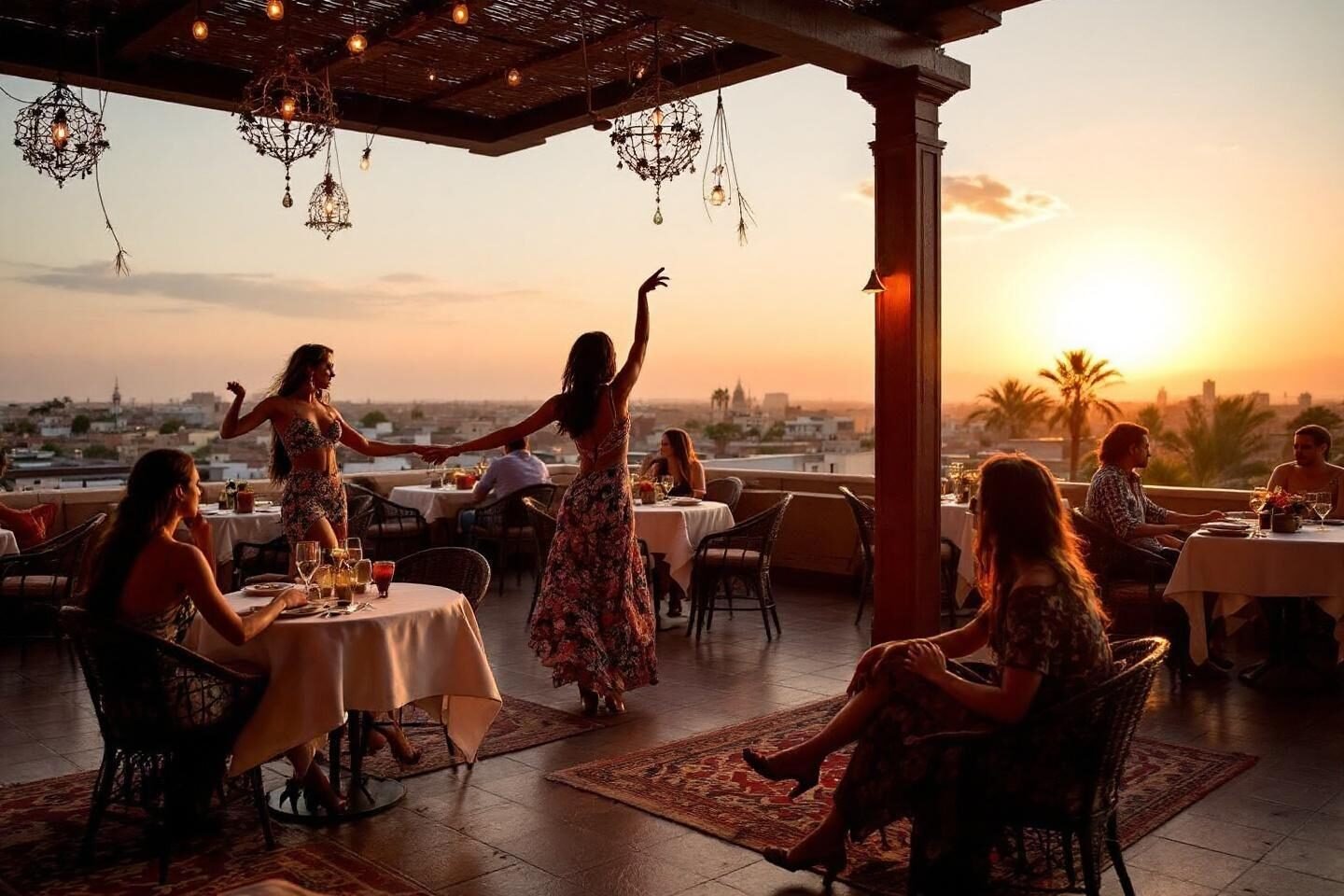
Restaurant Dar Essalam delivers unbelievable dinner shows combining excellent food with traditional Moroccan music played on native instruments, singing performances, candle balancers, and belly dancers who move between tables throughout meals. The lamb tagine and chicken with couscous earn particular recommendations, though all menu items maintain high standards. The entertainment transforms dinner into immersive cultural experiences that justify premium pricing.
Le Marocain at La Mamounia offers fine dining with prefixed menus showcasing Moroccan ingredients through refined techniques. Nomad presents modern Moroccan cuisine with rooftop views overlooking the Medina’s rooftops, popular with younger travelers seeking Instagram-worthy settings and creative menu interpretations. El Fenn Riad provides rooftop dining with direct Koutoubia mosque views creating dramatic backdrops for sunset meals.
Café D’Espices serves casual lunches in Souk Semmarine, perfect for breaking up shopping expeditions with rest and refreshment. Comptoir Darna combines lively music, dance performances, and inventive Moroccan food in atmospheric settings. Sahbi Sahbi features regional specialties prepared by female cooks, supporting women’s economic empowerment while delivering authentic home-style dishes rarely found in tourist restaurants.
Bacha Coffee inside Dar al Bacha Palace claims status as potentially the world’s most beautiful coffee house, featuring floors tiled like black and white checkerboards with pops of marigold orange packaging. The stunning wooden bar and pastry case occupy the center while knowledgeable waiters recommend selections from 200 coffee types sourced from 33 countries. The menu organizes choices by flavor profile, strength, and geographic origin, making selection manageable despite overwhelming options. The gift shop offers individual travel-sized pour-over packets perfect for bringing home Morocco’s coffee culture.
- Restaurant Dar Essalam combines dinner with traditional entertainment
- Nomad offers modern interpretations with Medina views
- Bacha Coffee provides 200 varieties in stunning settings
- Café D’Espices delivers casual lunches during souk shopping
Relaxation, spas, and the hammam experience
A hammam functions as a traditional public bath representing essential Moroccan cultural practice that visitors should experience at least once. At traditional public hammams, families or friends assist each other with exfoliation using black beldi soap made from olives and kessa glove mitts. The experience unfolds as a multi-step process in beautifully tiled steam rooms including full body scrubs, extended time in steam environments, and aromatherapy massages that leave skin impossibly soft.
Mythic Oriental Spa ranks among Marrakech’s top-rated hammams, with their Signature package including approximately fifteen minutes in steam rooms, complete full body scrubbing, and seventy-five minute argan oil aromatherapy massages, concluded with delicious snacks served on rooftops. Service throughout proves impeccable, with staff guiding visitors through each step and ensuring comfort despite the intimate nature of treatments.
Setting realistic expectations proves important. The experience involves being scrubbed down naked on wet benches by strangers, lying naked in saunas with other visitors, and having buckets of water dumped over heads to rinse away soap and dead skin. Western modesty norms don’t apply in hammam spaces, where nudity represents practical necessity rather than discomfort. Embracing the experience rather than fighting cultural differences allows full appreciation of this ancient cleansing ritual.
Hammam Rosa Bonheur offers another excellent option, while many luxury hotels including La Mamounia provide spa hammam experiences with additional privacy and amenities. Marrakech delivers affordable yet luxurious spa experiences that justify visits independent of other attractions. The combination of traditional techniques, quality products, and skilled practitioners creates results impossible to replicate at home regardless of budget.
Beldi soap and kessa gloves make perfect souvenirs, allowing travelers to recreate simplified versions of hammam experiences after returning home. These items cost minimal amounts in souks while delivering lasting reminders of Moroccan wellness traditions.
- Book hammam appointments in advance during peak seasons
- Bring minimal clothing and prepare for nudity
- Allow two to three hours for complete experiences
- Purchase beldi soap and kessa gloves as souvenirs
- Stay hydrated before and after treatments
Gardens, day trips, and beyond the city walls
Jardin Majorelle and outdoor spaces
Created by French artist Jacques Majorelle after relocating to Morocco for health reasons, Jardin Majorelle spreads across two meticulously maintained acres surrounding tranquil ponds, a museum, and charming café. Cultivation began in 1922 with ambitious goals of showcasing plants from across the world in thoughtfully designed landscapes. After Majorelle’s death in 1962, gardens fell into disrepair until 1980 when designer Yves Saint Laurent and partner Pierre Bergé purchased the property, undertaking extensive restorations that saved it from developers intent on demolition.
The gardens feature pristinely kept paths winding between lily ponds, diverse cacti collections, and cobalt-hued buildings draped in magenta bougainvillea that creates dramatic color contrasts. The signature blue, now called Majorelle blue, appears throughout buildings and accents, complementing rather than competing with botanical displays. The Berber museum occupies Majorelle’s former painting studio, presenting artifacts and information about Morocco’s indigenous Amazigh people through thoughtfully curated exhibits.
A quaint café serves refreshments in shaded settings while a well-curated boutique offers quality souvenirs, books, and design objects. The adjacent YSL Museum displays Yves Saint Laurent’s work and documents his deep connection with Marrakech. Best visited during early morning before heat intensifies and crowds arrive, though queues form well before official opening times. Located in the New Town, reaching the gardens requires taxis from the Medina, costing approximately 30-40 dirhams each direction.
Menara Gardens provide another vast garden space featuring emblematic basins where visitors relax and recharge. Though less architecturally significant than Jardin Majorelle, Menara offers peaceful retreats from urban intensity with local families picnicking under olive groves that stretch toward Atlas Mountain views.
- Arrive at Jardin Majorelle before 9 AM to avoid crowds
- Purchase tickets online to bypass queues
- Combine garden visits with YSL Museum tours
- Budget ninety minutes for thorough exploration
- Arrange return taxis before entering to avoid waiting
Atlas Mountains and desert day trips
Escaping Marrakech’s hustle proves worthwhile, with day trips offering dramatically different experiences from urban tourism. Book excursions after reading reviews to ensure quality guides and realistic itineraries. Advance booking secures better prices and guarantees availability, particularly during peak seasons when popular tours sell out quickly.
Day trips driving through Agafay Desert with camel rides and lunches with Berber families in Atlas Mountains consistently rank as trip highlights. These excursions provide glimpses into traditional lifestyles persisting in mountain villages, where hospitality and home cooking demonstrate Morocco beyond tourist-focused presentations. Overnight trips extend experiences, allowing stargazing in desert environments and watching sunrises over mountain peaks.
Half-day desert quad biking starts around £26 per person, offering adrenaline rushes through varied terrain. Full-day desert and mountain tours begin at £11 per person, though budget options sacrifice some comfort and personal attention. Spending nights glamping in Agafay Desert combines adventure with comfort, featuring furnished tents, proper beds, and meals under star-filled skies impossible to see from light-polluted cities.
Ourika Valley day trips showcase mountain waterfalls and hiking opportunities, while Ouzoud Waterfalls excursions from £12 per person visit Morocco’s highest waterfalls where resident Barbary monkeys entertain visitors. Local companies like Exciting Morocco Travel offer extensive arrays of day and overnight trips including hiking, quad biking, camel riding, and waterfall swimming tailored to different fitness levels and interests.
- Book day trips at least 48 hours in advance
- Verify what’s included in quoted prices
- Wear appropriate clothing for mountain weather
- Bring sun protection regardless of season
- Carry cash for optional purchases and tips
The Review
Things to do in Marrakesh
Thinking about visiting Marrakech? Discover the best things to do, where to stay, what to eat, and insider travel tips to plan the perfect Morocco getaway.
PROS
- Rich Cultural Experience
- Stunning Architecture & Landmarks
- Delicious Moroccan Cuisine
- Easy Desert Access
- Warm Climate
CONS
- Can Be Overwhelming
- Persistent Vendors
- Tourist Pricing
Things to do in Marrakesh DEALS
We collect information from many stores for best price available
 Things to do in Marrakesh